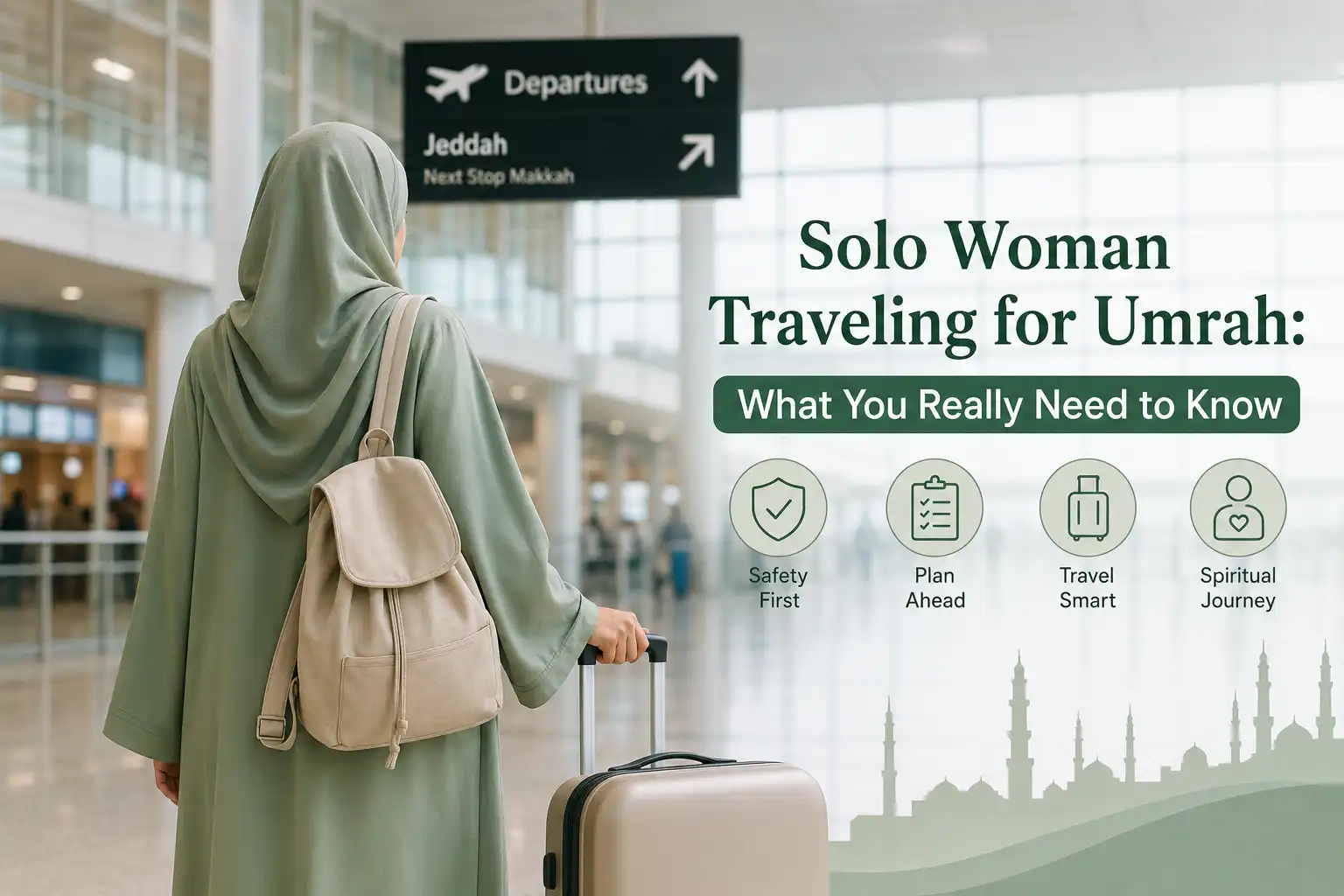

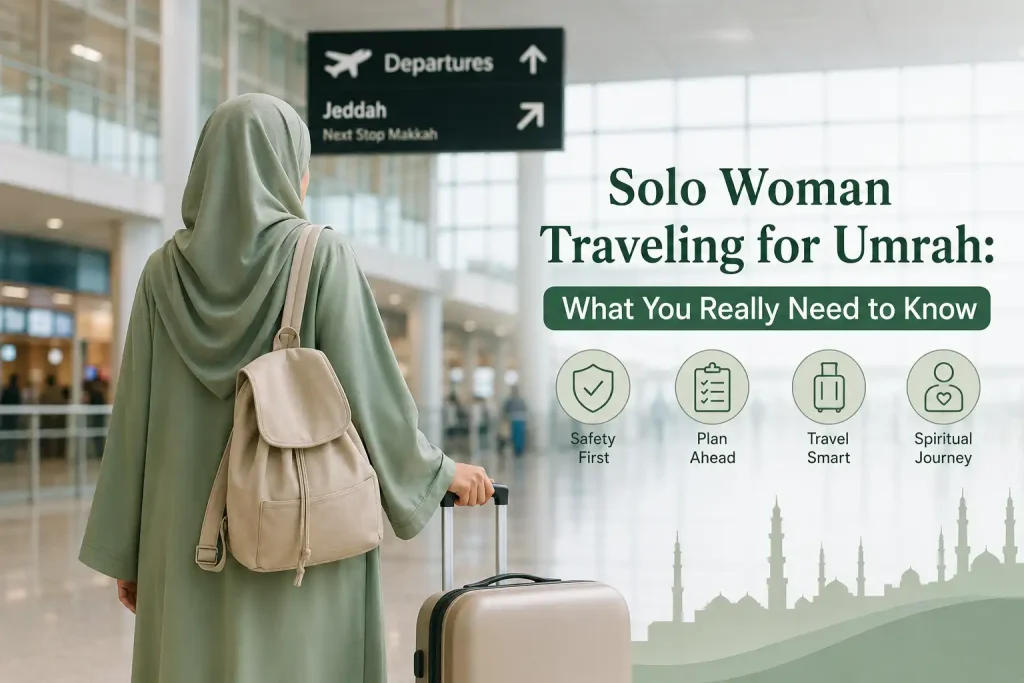
Yes, a solo woman can perform Umrah, and many women successfully complete this journey each year with proper preparation. Before diving into the emotional side of the trip, the direct answer is that independent travel is possible within current guidelines, provided you plan carefully rather than relying on guesswork.
Maybe your husband can’t get time off work. Maybe you’re unmarried, recently widowed, or simply ready before anyone else in your life is free to travel. You don’t owe anyone an explanation for that pull toward the Haram. You just need accurate information.
This guide covers the religious side honestly, the safety side practically, and the planning side in real detail, the way an experienced advisor would explain it to a woman sitting across from them.
Saudi Arabia Umrah Rules 2026 for Women
Travel requirements change, sometimes with little notice, so treat this section as a starting point rather than the final word. Always verify current rules with your agency or the official Saudi visa portal before booking.
- Passport validity: Give yourself at least six months left on your passport before you travel. Airlines and Saudi visa systems both check for this, and it’s an easy thing to miss if you’re not looking.
- Umrah visa: Apply through an authorized agency or the official Nusuk platform. Eligibility rules for solo female applicants aren’t always identical across nationalities, so it’s worth confirming yours directly rather than assuming.
- Age and entry conditions: Saudi authorities decide who can travel without a mahram and under what conditions. And these rules don’t stay fixed. Check these regulations before booking your Umrah packages.
- Health documentation: Vaccination requirements include the standard meningitis (ACWY) shot can shift depending on where you’re flying from and what season it is. Check with a travel clinic close to your departure date rather than relying on what was required last year.
Is Solo Woman Traveling for Umrah Safe?
Short answer: yes, with the right preparation. Makkah and Madinah are busy, well-monitored cities built around welcoming pilgrims, and the areas around the two holy mosques are heavily secured. That said, “safe” doesn’t mean you should wing it.
First-time pilgrims often underestimate the amount of physical walking involved, so keeping your logistics simple helps maintain your energy and peace of mind. Arranging your airport transfers and inter-city travel before you land, keeping a local SIM or international data plan active, and knowing who to call in an emergency make a significant difference.
Many first-time solo women feel noticeably more confident after the first day once they become familiar with the layout of the Haram and settle into their daily routine.
What Women Should Know About Makkah and Madinah
Each city asks something different from a first-time pilgrim, and knowing what to expect makes both visits easier.
Makkah
The area around Masjid al Haram stays busy nearly around the clock, especially during Tawaf hours. Walking distances can be significant, so choosing well-reviewed accommodation close to the mosque helps reduce daily fatigue.
Crowds move fast, and things get tight during peak prayer times, so keep your valuables close and stay aware of who’s around you. Pace yourself with the walking too, and drink more water than you think you need.
Madinah
Masjid an Nabawi and the surrounding city generally feel calmer and more relaxed than Makkah. Many women describe Madinah as the part of the trip where they finally slow down. Plan enough time here to visit the Prophet’s Mosque without rushing, since many first-time travelers regret compressing this part of the journey.
What Should Women Prepare Before Umrah?
Preparation for Umrah really happens on two tracks at once, the spiritual and the logistical, and both deserve attention.
Spiritual preparation
Start learning the actual steps of Umrah well before you travel, not on the plane. Know what Ihram requires, understand the sequence of Tawaf and Sa’i, and read through the du’as connected to each stage so they’re familiar rather than something you’re reading off a card while trying to walk and concentrate at the same time. Our complete Umrah guide walks through each ritual in plain language if you want a starting point.
This is also a good time to sit with your intention. Why are you going? What are you hoping to leave behind, and what are you hoping to bring back? Many women say the emotional preparation, the honesty with themselves before they even board the flight, shaped the trip as much as anything they packed.
Practical preparation
- Passport: Check that it has at least six months of validity remaining from your travel date.
- Health preparation: Make sure your routine vaccines are current, and pack personal medications in their original packaging along with prescription details.
- Budget planning: Account for the visa, flights, accommodation, local transport, meals and a buffer for minor expenses or gifts.
Complete Umrah Guide for Women
For first-time pilgrims, here’s the sequence in plain terms, with notes specific to women performing Umrah.
- Enter Ihram: Women don’t wear a specific garment like men do. Any loose, modest clothing that covers the body works, and the face and hands stay uncovered throughout. Make your intention (niyyah) and begin reciting the Talbiyah.
- Perform Tawaf: Walk seven times around the Kaaba. It will start and end at the Black Stone corner. Crowds can get intense, so be careful & active and don’t push others.
- Complete Sa’i: Walk seven times between Safa and Marwah, now through a long, air-conditioned corridor with wheelchair-accessible lanes available.
- Finish Umrah: Cut a small portion of hair, at least a fingertip’s length, to exit the state of Ihram.
Women pray in separate designated areas throughout both mosques, though the Tawaf area itself is shared. Traveling with a group for your first trip removes most of the guesswork during crowded moments.
What Should Women Pack for Umrah?
A good Umrah packing list for women balances modesty, comfort, and practicality.
- Clothing: Get loose and modest abayas or long dresses in breathable fabric. Also keep, comfortable hijabs or scarves with pins and closed walking sandals that are easy to slip on and off and a light jacket for cooler nights in Madinah.
- Prayer items: You should have a small & foldable prayer mat and a pocket-sized Quran & a tasbeeh.
- Personal care: Unscented wudu-friendly wipes, basic toiletries, feminine hygiene products, personal medication and a small first aid kit with blister plasters.
- Travel documents: Digital and physical copies of your passport, visa, vaccination records, and hotel confirmations, plus a card with emergency contacts and your hotel’s address in English and Arabic.
Common Mistakes Women Make During Their First Umrah
A few patterns show up again and again with first-time travelers, and most are easy to avoid once you know about them.
- Booking hotels too far from the Haram to save money, then losing that savings in exhaustion and taxi costs.
- Packing too much luggage, which becomes a real burden during transfers between Makkah and Madinah.
- Learning the rituals too late, sometimes only reading instructions during the flight itself.
- Underestimating the walking involved, especially during Tawaf and Sa’i in crowded conditions.
- Leaving documents disorganized, with no backup copies if a phone is lost or a bag is misplaced.
Solo Umrah Compared With Guided Umrah Packages
Both approaches work. The right choice depends on how much planning you want to handle yourself.
|
Factor |
Solo Travel | Guided Package |
|
Planning responsibility |
Entirely on you | Handled by the agency |
|
Airport assistance |
Independent coordination |
Coordinated arrivals and transfers |
|
Visa support |
Self-managed or agency-assisted |
Fully managed processing |
|
Emergency help |
Self-reliant (consulate/local contacts) |
Agency coordinator on call |
|
Religious guidance |
Self-guided via resources |
Group leader or scholar guidance |
|
Women’s group support |
Independent experience |
Built-in companion group network |
|
Flexibility |
Full control over schedule |
Fixed group itinerary |
| Convenience | Requires more research |
Bookings bundled together |
| Cost management | Separate bookings, harder to predict |
One upfront cost |
Tips for Women Traveling for Umrah Alone
A few things that make a real difference, based on what women who’ve done this consistently mention afterward:
- Stay connected with family: A quick daily check-in message costs nothing and saves everyone worry. Share your itinerary before you leave home. With that, they always know where you roughly should be.
- Protect your important documents: Keep your passport and visa in a cross-body bag you wear under your abaya during crowded times like Tawaf, not in a loose handbag.
- Plan transportation ahead of time: Book your Makkah to Madinah transfer, and your airport pickups, before you land rather than sorting it out on arrival.
- Manage personal needs thoughtfully: Find out where the women’s prayer areas and facilities are in both mosques before you need them. Mosque staff are there for exactly this reason, so don’t hesitate to ask.
- Respect the local culture: Saudi Arabia has relaxed a lot of its rules in recent years, but modest dress and respectful public behavior still matter, especially around the Haram.
- Travel with a verified group when possible: Even women who feel completely confident going alone often end up joining a small women’s group anyway, mostly for the company during long prayer sessions and the shared logistics.
Why Women Choose Guided Umrah Packages
Independent travel suits women who’ve done their homework and feel confident navigating logistics. But many first-timers find that a guided option removes stress they didn’t expect to carry.
A structured package usually bundles visa processing, flights, hotel bookings near the Haram, inter-city transport, and a group leader who answers questions in real time. That last part matters most during your first Tawaf, when reading instructions off a phone mid-crowd isn’t realistic.
Budgeting gets simpler too, since one upfront cost replaces several separate bookings. Browse current Umrah packages to compare what a fully guided trip typically includes.
How Alhadi Travel US Supports Women During Umrah
Preparing for Umrah alone can feel overwhelming, and that’s where our work actually starts. We walk women through visa requirements, answer questions honestly, and help think through logistics that first-time travelers often miss entirely.
Once you land, support continues with organized transport, accommodation near the two holy mosques, and a contact who understands local systems if something unexpected comes up. We also connect solo travelers with other women on the same trip, so no one navigates unfamiliar streets entirely alone.
Learn more about Alhadi Travel US and how our services are built around the concerns women raise most often. We also offer broader Islamic travel services for Hajj and extended family trips planned alongside Umrah.
Ready to explore your options or need clarity on planning your pilgrimage? Feel free to reach out to Alhadi Travel US to speak with an advisor. They answer your questions calmly and transparently without any pressure.
Disclaimer: Saudi visa rules & health requirements and entry policies are subject to change. Travelers are strongly encouraged to verify the latest information through official Saudi authorities or a licensed Umrah travel provider before booking their journey.