
In one sentence, Hajj is one of the greatest journeys that a Muslim can make during his life. It is not a normal trip or vacation. It is a spiritual duty. People from many countries travel to the holy city of Mecca in Saudi Arabia.
Hajj is defined as a particular set of sacred rituals and prayers carried out in a specific period of time by pilgrims. What Muslims experience during Hajj is much more than walking around a physical structure or visiting a historical city. A journey of the soul, a profound journey.
The journey of pilgrimage offers a transforming opportunity to spiritually wipe the slate clean, seek sincere forgiveness and get infinitely closer to Allah.
The Importance of Hajj: A Pillar of Islam and a Journey of a Lifetime
Muslims have performed this pilgrimage for many centuries. It remains one of the strongest ways to practice their faith.
People often ask why Hajj is important. The reason is clear and deep. Every Muslim must try to complete Hajj at least once if they have the money and health to do it. This requirement makes Hajj one of the five pillars of Islam.
Hajj gives Muslims a chance to renew themselves. This is a high point in their spiritual life. Pilgrims return home changed at the end of their pilgrimage. They bear with them the fruit of deep prayer & reflection.
Hajj also shows unity. Muslims from different countries, cultures and backgrounds stand together as equals. Rich and poor, young and old wear the same simple clothes and follow the same actions. This creates strong bonds among believers.
Hajj 2026 Dates: When Does This Year’s Pilgrimage Take Place?
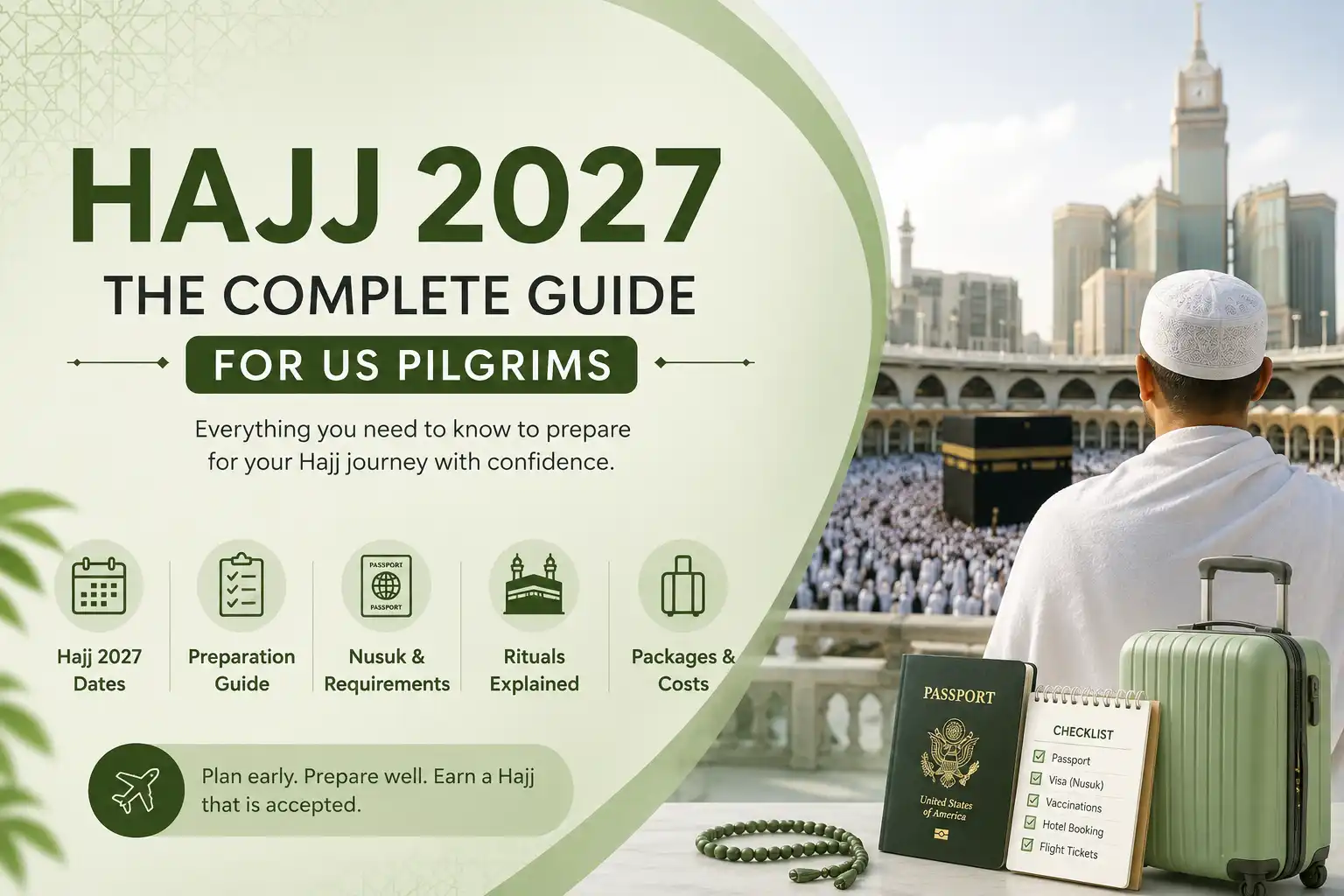
If you want to go this year, you need the exact Hajj 2026 dates. The Hajj will be in the approximate time frame of May 25-May 30, 2026. The trip begins on the evening of Monday, May 25.
The most important day is the day of Arafat, Tuesday, 26 May 2026. On this day devotees gather here to pray and meditate. Eid al-Adha falls on Wednesday, 27 May 2026.
These dates are according to the Islamic calendar, which is based on the moon. Dates can shift a little based on moon sighting. Work with a trusted hajj travel agency to get the latest information.
The Complete Hajj Step by Step: What Happens During the Pilgrimage
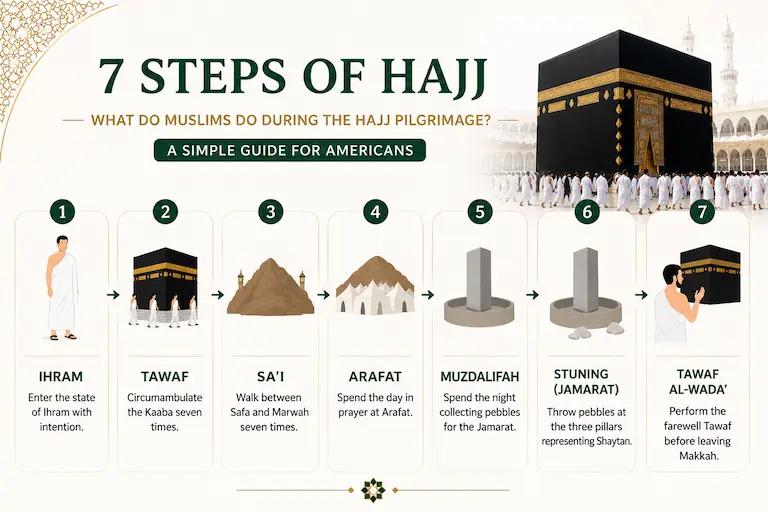
You must understand the 7 steps of the Hajj to know what pilgrims do. The rituals follow a clear order.
Here is a simple explanation of the main steps of Hajj:
Step 1: Making the Intention
The journey begins inward. Long before stepping through their front door, a pilgrim resolves to undertake Hajj solely to worship Allah.
Most people start this spiritual shift weeks before flying out, spending their extra time in prayer, seeking forgiveness, and examining their personal reasons for going.
Step 2: Entering the State of Ihram
Ihram is where the spiritual rules kick in. For men, that means wearing two plain, unstitched white sheets. Women wear loose, modest everyday clothes that meet normal Islamic guidelines.
Once you’re in Ihram, basic habits stop. You can’t trim your nails, cut your hair, or use scented soap and perfume. The pilgrims repeat the Talbiyah constantly as they walk so that their hearts are focused on the journey, responding again and again to Allah’s invitation.
Step 3: Performing Tawaf
Tawaf involves circling the Kaaba seven times inside the Grand Mosque at Makkah. As you drift around it with the crowd, you make your own dua, ask for forgiveness, and keep your thoughts on Allah.
It puts real equality on full display. You have millions of people from totally different countries, speaking dozens of languages, all moving around the same building as complete equals before Allah.
Step 4: Walking Between Safa and Marwa
Next comes Sa’i—walking back and forth seven times between the hills of Safa and Marwa inside the mosque complex. This rite honors Hajar’s desperate search for water for her infant son Ismail.
The walk takes real physical stamina, especially when maneuvering through dense crowds. Building up a daily walking routine before leaving home helps you handle the distance.
Step 5: Traveling to Mina
On the 8th of Dhu al-Hijjah, pilgrims head over to Mina and move into the sprawling tent city. The day and night are spent in prayer, quiet worship, and resting up for the main event.
This pause in Mina gives everyone time to catch their breath and get mentally ready for the standing at Arafah.
Step 6: Standing at Arafah
Standing at Arafah on the 9th of Dhu al-Hijjah forms the absolute heart of the Hajj pilgrimage. Millions of pilgrims gather across the open plain of Arafah from midday until sunset, spending these critical hours in sincere prayer, deep reflection and repentance while asking Allah for forgiveness and mercy.
Pilgrims use every moment of this time to call upon Allah, shed tears and seek His grace. The afternoon spent at Arafah holds the most central, spiritually intense place in the entire Hajj journey.
Step 7: Moving to Muzdalifah
After sunset on the Day of Arafah, pilgrims leave the plain and travel directly to Muzdalifah. Upon arrival, they spend part of the night under the open sky engaged in prayer, quiet worship, and remembrance of Allah.
While here, you gather small pebbles off the ground to use for the upcoming stoning rituals. It’s a peaceful, subdued night right after the emotional peak of Arafah.
The Remaining Steps
After Muzdalifah, pilgrims head back to Mina for Rami—throwing pebbles at the Jamarat pillars to reject evil, following the tradition of Prophet Ibrahim (peace be upon him).
From there, you arrange the animal sacrifice (Hady) if required, shave or trim your hair and return to Makkah for Tawaf al-Ifadah. Finally, just before heading home from Makkah, you walk around the Kaaba one last time for Tawaf al-Wida—your farewell to the sacred city.
Types of Hajj: Which Method Works for You?
You can perform Hajj using one of three structural methods. It all depends on how you handle Umrah. The main difference comes down to whether you break Ihram in between.
- Hajj Ifrad: This way you enter Ihram and perform Hajj alone. You don’t combine Umrah with Hajj. Once you’ve completed the Hajj rites, you can perform Umrah separately if you wish. This type of Hajj is less common among pilgrims traveling from the United States.
- Hajj Qiran: You can perform Umrah and Hajj in one continuous Ihram. You set the intention for both at the start and remain in Ihram until all Hajj rites are complete. Qiran requires an animal sacrifice (Hady).
- Hajj Tamattu: Here, you perform Umrah first, trim your hair, and completely exit Ihram to rest in Makkah. On the 8th of Dhu al-Hijjah, you enter a fresh state of Ihram specifically for Hajj. Because of the break between rites, Tamattu is by far the most popular choice for American and international pilgrims.
For pilgrims traveling from distant countries, Tamattu can also make the journey easier to manage. You complete Umrah first, take a break from Ihram, and then begin the Hajj rites with a fresh state of Ihram.
Practical Information for American Pilgrims
Getting Your Visa and Permits
American pilgrims book through the official Nusuk system. An approved hajj travel agency helps with the process and paperwork.
Physical Preparation for the Journey
Hajj demands physical effort. Start aerobic exercise like daily walking months ahead. Practice wearing ihram clothes so you feel comfortable.
Choosing the Right Accommodation
When possible, choose clean and safe places close to the main sites. Good packages include meals, transportation between holy places and support in English.
What to Pack for Your Hajj Journey
Wear comfortable walking shoes, light clothes, take your necessary medicines, phone charger and your personal items. Carry copies of your passport, visa and health records in a safe place.
The Spiritual Meaning: Dua and Prayers During Hajj
Pilgrims pray and ask for forgiveness all through the journey. Dua means personal prayers to God. The strongest time for dua Hajj comes while standing at Arafah. One of the most important Hajj duas is the Talbiyah.
In Arabic it is:
لَبَّيْكَ اللَّهُمَّ لَبَّيْكَ، لَبَّيْكَ لَا شَرِيكَ لَكَ لَبَّيْكَ، إِنَّ الْحَمْدَ وَالنِّعْمَةَ لَكَ وَالْمُلْكَ، لَا شَرِيكَ لَكَ
Its English translation is:
“Here I am, O Allah, here I am. Here I am, you have no partner, here I am. Verily, all praise, grace and sovereignty belong to You. You have no partner.”
This dua is one of total submission to God and is repeated many times during the Hajj pilgrimage. It helps pilgrims to concentrate and reminds them of the purpose of their pilgrimage.
Interesting Hajj Facts
More than two million pilgrims from over 180 countries converge in Saudi Arabia each year, creating one of the largest, most powerful annual gatherings of humanity on Earth. This staggering assembly of diverse nations creates an atmosphere of breathtaking global unity—where kings and commoners, rich and poor, stand shoulder-to-shoulder in complete equality before Allah.
Getting Started on Your Hajj Journey
Start preparation now for Hajj 2026. Dates are fast coming and places go fast. It is easier to plan with an experienced Hajj travel agency.
The Hajj teaches patience, humility and faith. It says that all are equal in the eyes of God. Pilgrims often say it is one of the most important experiences of their lives.